Last updated: 08 November 2026
The Future of Indoor Lighting: Tunable White, Controls & Colour
Indoor lighting is becoming more adaptable, intelligent and responsive to the people using a space. Tunable white technology, smarter lighting controls and new approaches to colour rendering are giving designers more control over how indoor environments look, feel and perform.
Rather than providing one fixed light output, modern lighting solutions can respond to occupancy, available daylight and the different ways a space is used throughout the day.
Here, we look at some of the technologies and developments shaping the future of indoor lighting.
Tunable white: Lighting that adapts to the space
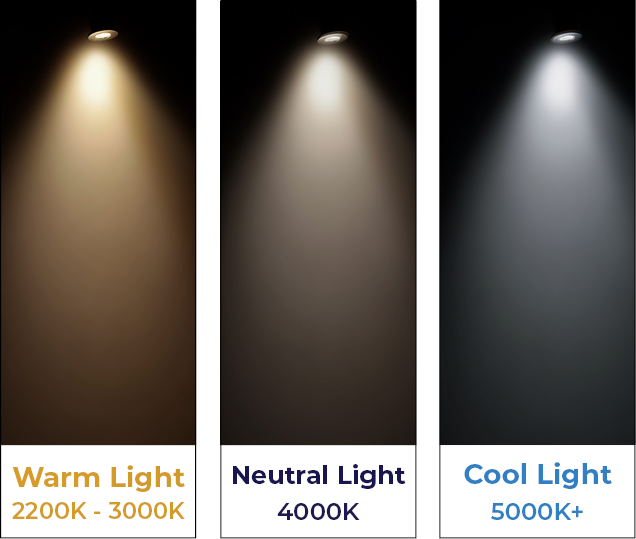
Tunable white lighting allows the colour temperature of light to be adjusted to suit different activities, environments and times of day.
Rather than committing a space to one fixed colour temperature, users can shift between warmer and cooler light to suit different activities and uses within the same space.
Beyond CRI: Understanding TM-30
Colour rendering ability of a light source is a measure of how accurately the light source depicts the true colour of the objects/surfaces on which light is falling.
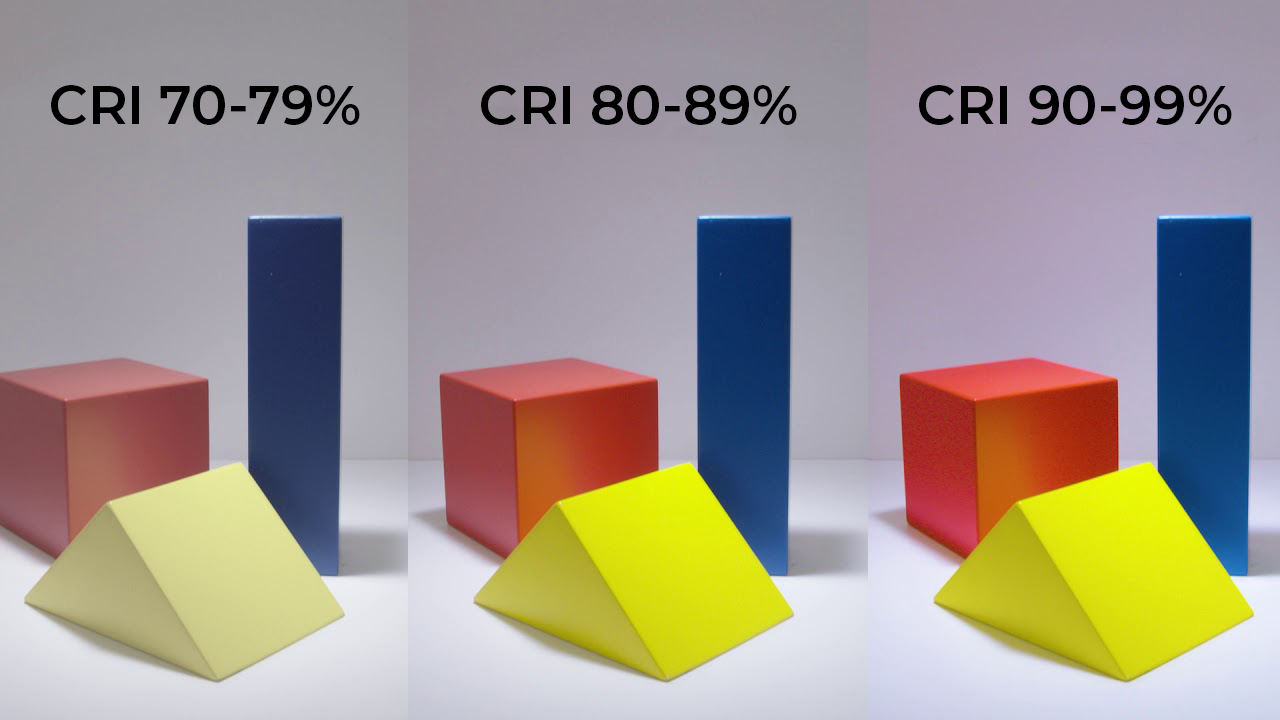
The colour rendering metric is undergoing a major shift. The traditional Colour Rendering Index (CRI, last updated in 1995) has long been used to measure how accurately a light source shows colours. However, this metric has limitations, particularly in how it represents certain shades. This is where TM30 plays a key role.
TM30, first introduced in 2015 and revised as recently as 2024, goes beyond CRI by providing a much more vibrant and accurate colour palette, offering a clearer representation of how light interacts with surfaces. Two major differences between CRI & TM30 metric are as follows:
Sample Sets:
CRI method assesses colour quality/rendering across a limited set of 8 pastel colours only.
TM-30 uses 99 colour samples, having a much wider range of hue, saturation & lightness. Thereby facilitating a more comprehensive evaluation of colour reproduction.
Metric of Evaluation:
CRI method uses a single light fidelity metric only (Ra). Fidelity is the degree of similarity between colours rendered by the test source vs a standard illuminant.
TM30 method uses combination of six metrics and one colour vector graphic to provide a much-detailed evaluation of colour rendering.
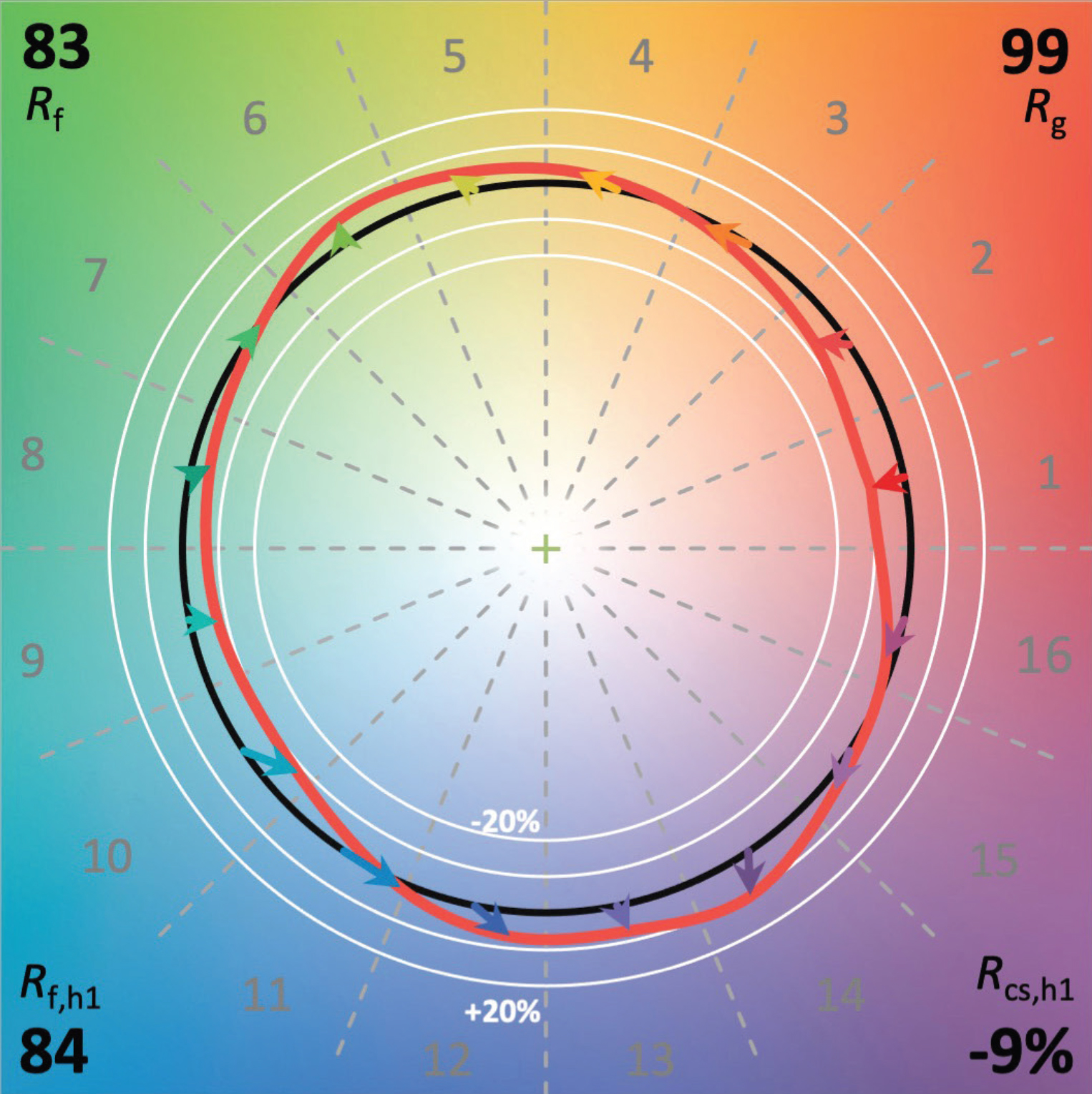
TM-30 Colour Vector Graphic
This change is not just technical; it’s transformative. When you measure light colour quality with TM30, you get a more accurate understanding of colour in your environment, leading to better design choices. Expect this metric to become the new standard in datasheets, as more lighting solutions, including enLighten’s products, adopt this more effective testing method.
Smarter lighting controls
Lighting controls allow indoor lighting to respond to how a space is actually being used. Depending on the system, lighting can be automatically switched or dimmed based on occupancy, time of day or available daylight. This can reduce unnecessary energy use while giving building owners and users greater control over when and how spaces are illuminated. More advanced control systems can also connect lighting across different areas of a building, allowing settings and operating schedules to be tailored to different spaces and activities.
What does the NCC require?
In Australia, lighting controls are also influenced by the National Construction Code (NCC), which includes energy-efficiency requirements for artificial lighting and lighting controls in commercial buildings. The type of control required depends on factors such as the building classification, space and lighting application, so controls should be considered as part of the lighting design rather than added as an afterthought.
Standards Shaping Indoor Lighting
Indoor lighting in Australia is governed by the National Construction Code and Australian Standards.
The National Construction Code covers artificial or electric lighting and emergency and exit lighting. Key Australian Standards relevant to indoor lighting include:
AS 1680, the series of Standards governing interior and exterior workplace lighting.
AS 2293, the series of Standards governing emergency and exit lighting.
Separate Australian Standards govern roads and public spaces, sports lighting and obtrusive outdoor lighting.
Keeping up with a changing lighting industry
enLighten keeps up to date with the latest developments across the lighting industry. We are corporate members of the Lighting Council of Australia (LCA) and IES Australia & New Zealand (IESANZ), and enLighten staff sit on technical committees that develop Australian Standards.
The future of indoor lighting
From tunable white and smarter controls to developments in colour rendering and lighting Standards, indoor lighting continues to evolve. These developments are giving designers more options when creating innovative, efficient, safe and comfortable indoor spaces.
Stay ahead of the curve by exploring our latest products on our website and reaching out to our technical sales team at sales@enlighten.com.au.